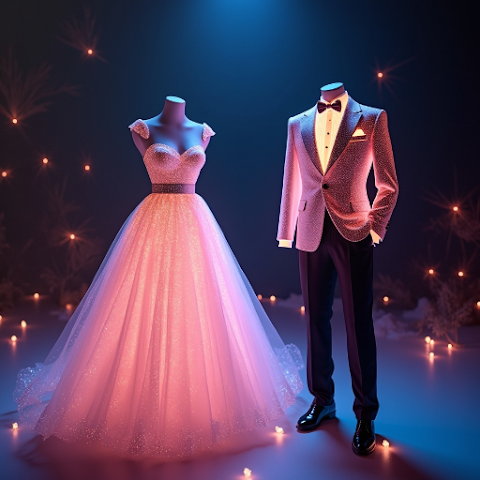
How Accurate Are AI Clothes Changers? An Honest Assessment
Marketing promises 'perfect' try-on. Reality is more nuanced. Here is a real, honest accuracy assessment of AI clothes changers in 2026.
How Accurate Are AI Clothes Changers? An Honest Assessment
Most articles on AI clothes changer accuracy either overpromise ("indistinguishable from reality") or dismiss the category entirely. Neither is right. In 2026 the honest answer is: accurate enough to change real purchase decisions for 80% of common garments, with specific, predictable failure modes on the remaining 20%. This piece lays out those failure modes, explains how to read the output, and gives you a practical framework for deciding when to trust a try-on image and when not to.
Defining "Accurate" First
Accuracy has three axes that often get confused:
- Visual realism — does the image look like a real photo?
- Garment fidelity — does the rendered garment match the source garment in shape, pattern, and colour?
- Body fidelity — does the output preserve your actual body shape, skin tone, and facial identity?
A tool can ace one and fail the other two. A common pattern: outputs look photorealistic (high visual realism) but slim your waist slightly (low body fidelity). Knowing which axis you care about changes how you evaluate results.
Where Accuracy Is High in 2026
Based on consistent output quality across 2026-era apps:
- Plain tees, sweatshirts, and fitted tops: near-photographic.
- Jeans and chinos: very good for straight and skinny cuts.
- Simple dresses (A-line, bodycon): strong.
- Outerwear with defined structure: jackets and coats render cleanly.
- Solid colours: colour matching is reliable.
For these categories, you can reasonably trust the output enough to make purchase decisions.
Where Accuracy Drops
Predictable weak spots in 2026:
Very loose or draped fabrics
Tulle, chiffon, bias-cut silks. The model has to invent folds it cannot ground in the source photo, and the folds often look arbitrary across regenerations.
Complex patterns and text
Fine text, small logos, pinstripes, and intricate florals lose fidelity as they wrap around curves. Large prints do better than small ones.
Translucent materials
Lace, sheer tops, mesh. The model tends to render them as opaque or as noise.
Layered looks
Multiple garment layers (vest over shirt over tee) are hard — the model often merges or misorders layers.
Unusual poses
Arms-overhead, crouching, mid-motion. The model was trained mostly on neutral standing poses and extrapolates poorly.
The Regeneration Trick
Diffusion models are stochastic. The same input can produce noticeably different outputs across runs. A practical habit: regenerate any questionable result at least once before rejecting it. The second pass is often the better of the two.
If three regenerations all fail on the same issue, the input is usually the problem, not the model. Common culprits: blurry photos, bad lighting, garment shot against a cluttered background.
How to Read a Try-On Image Correctly
Look for these, in order:
- Silhouette. Does the garment's shape match the source (cropped stays cropped, oversized stays oversized)?
- Pattern placement. If there is a print, is it roughly in the right place?
- Neckline and hem. Easy-to-spot errors — wrong collar or hemline means the model misread the garment.
- Drape consistency. Do folds and shadows match your body's pose?
- Body preservation. Compare the output to the input — has your face or body changed?
If points 1, 2, and 5 are solid, the rest is acceptable. If 5 is wrong, switch apps — identity drift is a dealbreaker.
Accuracy vs Decision Usefulness
These are not the same thing. An 85%-accurate image can be 100% useful for a buying decision if the 15% error is on something you do not care about (tiny logo placement, exact pleating). Conversely, a 95%-accurate image that slims your waist is 0% useful for a buying decision because the body-fidelity issue poisons your read on whether the garment suits you.
We explored this gap in virtual try-on vs real shopping.
Benchmark-Worthy Tests
A small personal benchmark to evaluate any try-on app:
- Run the same photo with a plain white tee. Colour should be clean white.
- Run the same photo with a simple logo tee. Logo should be roughly centred.
- Run the same photo with a patterned dress. Pattern should flow with the body, not tile flatly.
- Regenerate each twice. Variance tells you whether the model is stable.
We used a similar methodology in our 2026 outfit swap app roundup.
Why Competitor Marketing Lies
Marketing assets are cherry-picked. A company will generate 20 outputs, pick the one perfect result, and put it in the hero image. Real-world averages are noticeably worse. This is not unique to AI — every product's marketing reel hides its misses — but it is worth calibrating against. The real test is your third or fourth everyday try-on, not the hero shot.
When Not to Trust the Output
Skip the try-on image for purchase decisions if:
- The garment is heavily beaded, sequinned, or intricately textured.
- The fit is the deciding factor (custom tailoring, formalwear).
- The fabric's weight or drape matters more than its appearance.
- You are dealing with layering or asymmetric cuts.
For those categories, the try-on is inspiration, not verdict. Use size charts and reviews for the final call.
Ready to Test an App's Accuracy?
Run the benchmark above on any app you are considering. AI Outfit Swap is a free place to start — no signup wall, so you can test accuracy before committing time. Install it from the download page. Or grab it directly from Google Play, the App Store, or the download page.
Frequently Asked Questions
What accuracy number should I expect in 2026?
There is no single number. For common garments, the average output is good enough to make purchase decisions roughly 80% of the time. For edge cases (sheer, heavily draped, layered), it drops to 40–60%.
Do all apps have the same accuracy?
No. Despite the underlying technology being similar, engineering quality, training data, and post-processing vary widely. Benchmark before trusting.
Does paying for premium improve accuracy?
Sometimes marginally — higher-resolution outputs and access to newer models — but not dramatically. Free tiers are usable for most decisions.
Can the app distort my body?
A well-built one should not. If it consistently slims or alters your shape, switch apps.
What fails most often?
Very loose fabrics, sheer materials, fine prints, and unusual poses. See the detailed list above.
Written By